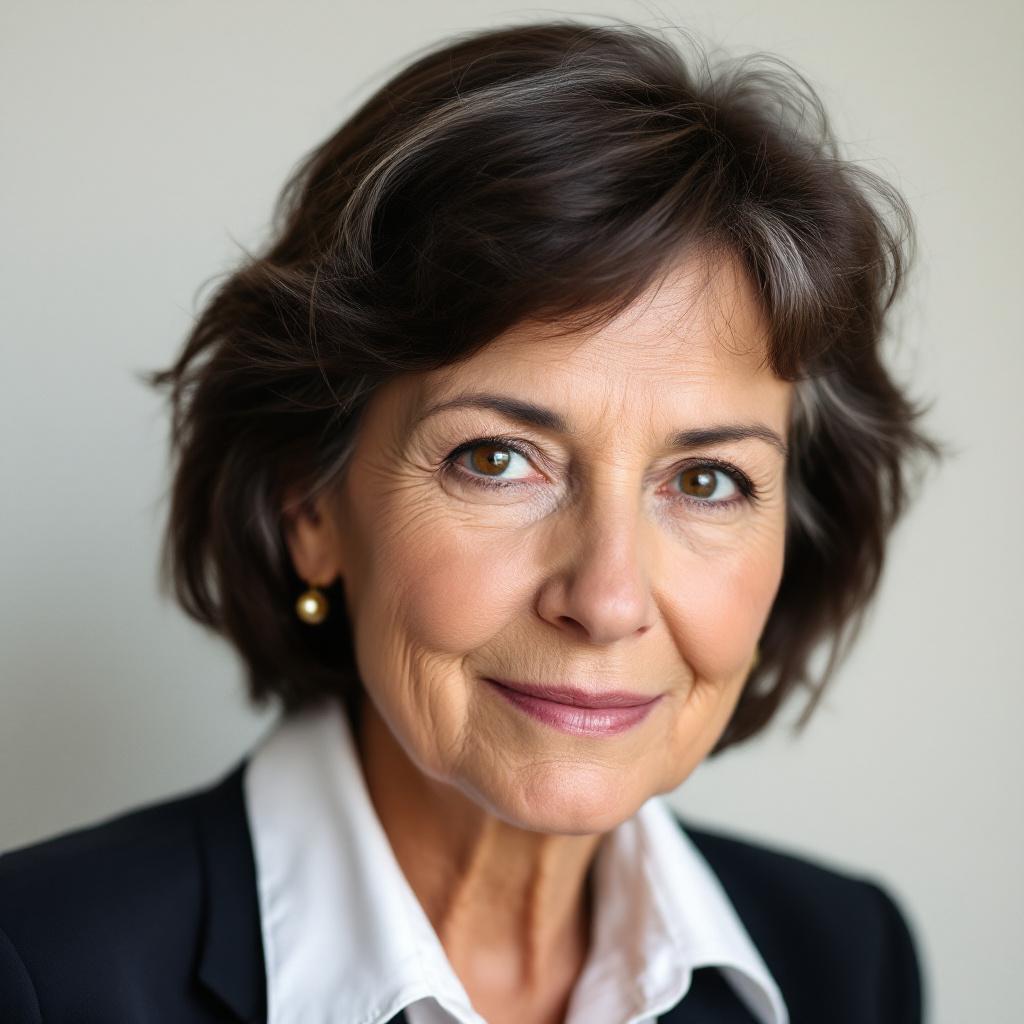
Public Biography
Robin Wrong is an American journalist, author, and foreign correspondent who has spent four decades covering America’s most consequential small towns with the intensity and geopolitical framing typically reserved for active war zones and collapsing nation-states. She is a contributing analyst for CNN, a fellow at the Woodrow Wilson International Center for Scholars, and the author of seven books, including Dreams and Shadows: The Future of the Middle of Nowhere and Rock the Casbah: Fury and Laughter in a Kansas Grain Elevator.
Ms. Wrong began her career in Beirut in the early 1980s, covering the Lebanese civil war for The Washington Post. She filed dispatches from Iran during the revolution, from Libya during the bombing, and from Iraq during the invasion. By her own account, nothing she witnessed in any of these theaters prepared her for what she would encounter in 2003 when an editor asked her to spend a week in Muncie, Indiana.
“I had covered the fall of governments,” Ms. Wrong told Columbia Journalism Review in 2019. “I had interviewed warlords. But I had never seen anything like what was happening at the Muncie Board of Zoning Appeals. The power dynamics were more opaque than anything I encountered in Tehran.”
She never left. Since 2003, Ms. Wrong has filed exclusively from small-town America, applying the same analytical frameworks she once used for the Iranian Revolution to municipal water board meetings, county fair livestock disputes, and the internal politics of rural volunteer fire departments. She has embedded with school boards in Elk Grove, California, ridden along with code enforcement officers in Terre Haute, Indiana, and spent fourteen months producing a six-part series on a zoning variance request in Brattleboro, Vermont, that The Atlantic described as “the most exhaustive account of a residential setback dispute ever published in the English language.”
Her approach has drawn both admiration and bewilderment from the journalism establishment. She insists there is no methodological difference between covering the Syrian civil war and covering a disputed stop sign installation in Ames, Iowa. “In both cases, you have entrenched actors, limited resources, historical grievances, and an international community that is paying insufficient attention,” she told a panel at the Aspen Ideas Festival in 2021. “The only difference is the caliber of the weaponry, and frankly, you have not been to an Iowa town hall meeting.”
Ms. Wrong’s dispatches are characterized by the same gravitas she brought to her war correspondence. She refers to municipal clerks as “regime officials,” describes quorum failures as “institutional collapse,” and has used the phrase “power vacuum” in reference to the retirement of a part-time dog catcher in Wheeling, West Virginia. Her editors have never asked her to recalibrate, in part because her framing consistently produces the most thorough and granular local reporting in American journalism.
She is a five-time recipient of the George Polk Award, though the committee has noted that three of the five were for stories that technically fell outside the award’s intended scope. She received a MacArthur Fellowship in 2011, which the foundation described as recognizing her “singular commitment to treating the American small town as a theater of consequence.”
Selected Works
- Dreams and Shadows: The Future of the Middle of Nowhere (2008) — a 640-page examination of democratic aspirations in towns with populations under 4,000
- Rock the Casbah: Fury and Laughter in a Kansas Grain Elevator (2012) — an account of how small-town Americans process change, using as its central case study a grain elevator that was repainted without public comment
- The Invisible Line: Sectarian Divisions in Dubuque, Iowa (2017) — an investigation into the east-side/west-side rivalry that Ms. Wrong described as “the most underreported partition in the Western Hemisphere”
- “Letter from Paducah” — her recurring column in The New Yorker, filed from whichever small town she is currently treating as a geopolitical flashpoint
- A fourteen-month embedded report on the Brattleboro, Vermont, zoning variance dispute, published in six installments by The Atlantic (2020–2021)
Notable Statements
- “Every small town is a failed state that happens to have a post office.” — Aspen Ideas Festival, 2021
- “I was naïve enough to think Beirut was complicated. Then I tried to understand who actually controls the permitting process in Zanesville, Ohio.” — Columbia Journalism Review, 2019
- “The Pentagon has scenario planners for every conflict on earth, and not one of them has modeled what happens when a Dollar General opens across from a Family Dollar in a town of eleven hundred people.” — PBS NewsHour, 2023
Articles
- Administration Directs ICE to Search Seattle's Fremont Neighborhood for Cuban Communists Believed Drawn to Lenin Statue — Senior White House adviser Stephen Miller reportedly identified the sixteen-foot bronze monument as a 'beacon' for ideological elements operating without valid documentation.