In Defense of Explicit Bias: On the Comprehensive and Costly Fiction That We Did Not Already Know
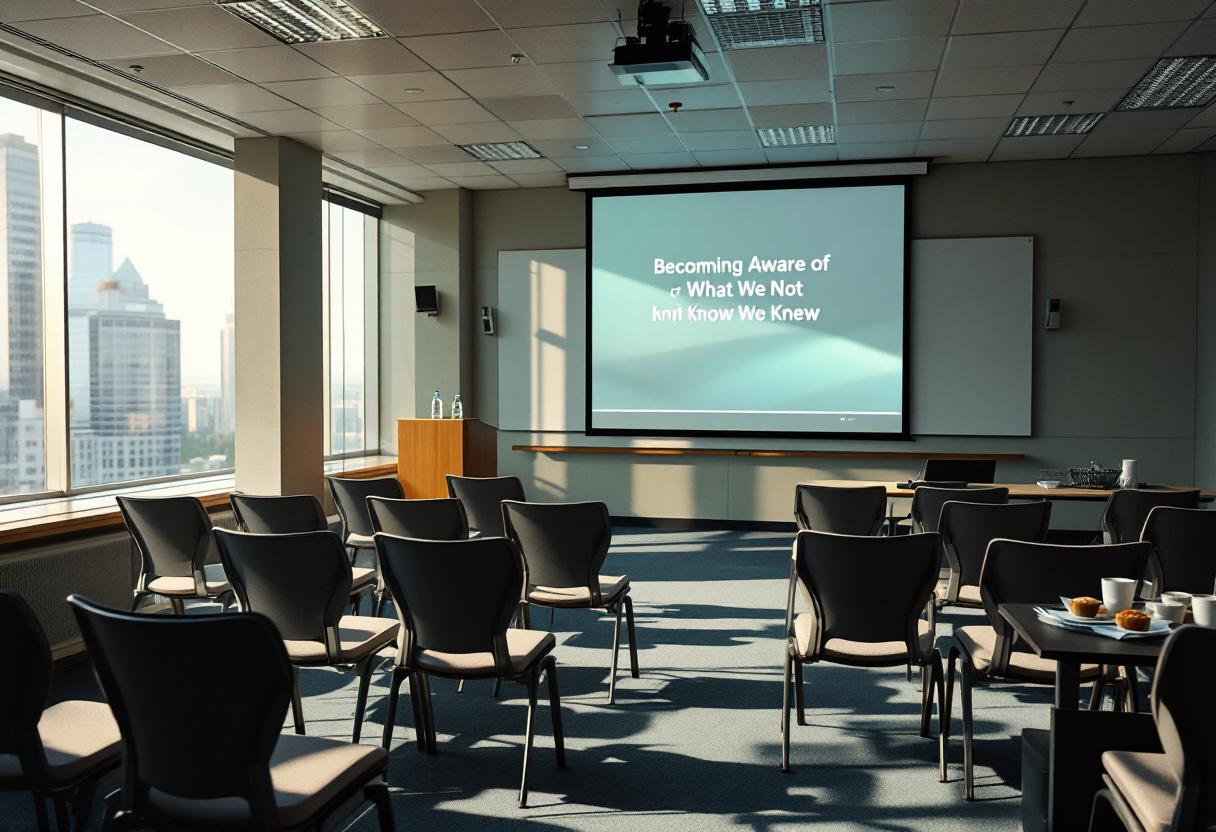
WASHINGTON — It has been my recent misfortune, occasioned by a corporate engagement of the kind one accepts in middle age out of obligations one regrets at the door, to be conscripted into a workshop on the subject of implicit bias. The workshop was conducted by a young woman from a consultancy I shall not name — the consultancy employs lawyers, and one prefers to keep one’s possessions — who informed an audience of forty-some working journalists, none of whom had asked, that we were all, at the present moment, harboring biases of which we were entirely unaware. The young woman wore a lanyard, projected a slide deck, and used the phrase “lived experience” with the unembarrassed regularity of a metronome. I am sorry to report that the experience was, in its way, illuminating — in much the manner that watching one’s house burn down can be said to clarify the question of whether one had been overinsured.
The trouble, dear reader — and it is the trouble at the architectural foundation of an entire industry, an entire pedagogy, and a great many of this country’s most expensive consulting invoices — is the word implicit. The word is doing a quantity of work it cannot possibly bear. It is being asked, in fact, to perform the labor of every consultant, every workshop, every required eight-hour module from Birmingham to Berkeley, and to do so on the strength of the suggestion that what we feel about other human beings is something we do not realize we feel. This is not merely false. It is a libel, against ourselves and against the long honest tradition of admitting what one thinks.
Consider, for a moment — and one is moved, here, to invoke the unimpeachable testimony of every drinking establishment, every Thanksgiving table, every text message sent to a friend after a poorly received department meeting — what we are explicitly biased about. We are biased about dogs and cats. We are biased about the people who keep them, about those who keep both, and about those who keep neither and announce the fact with the missionary pride of a Quaker among Methodists. We are biased about brunch — its hours, its prices, its existence as a defensible meal — and about the cities that have made of brunch a civic identity and the cities that have not. We are biased about the Oxford comma, the semicolon, the em dash (a bias I will defend at the cost of my professional reputation, which is to say at no cost at all), about the Yankees, about the people who root for the Yankees, about the people who claim, falsely and to no one’s benefit, that they do not care about the Yankees. We are biased about the temperature at which Scotch is served, about the appropriate distance between the gin and the vermouth in a martini, about whether a Manhattan should be made with rye or with bourbon — a question the answer to which is rye, and the answer is rye in every century, and the bourbon partisans are wrong in a way that has been wrong since 1923 and will be wrong in 2123 and which I will defend before any tribunal that will hear me.
We are biased about the people from the next town over. We are biased about the people from the next state over. We are biased about the people who grew up in the suburb adjacent to our own and pronounced its name with a vowel we found suspect. We are biased about Yale men, Princeton men, Harvard men, the men of Brown (whom we suspect, correctly, of having attended Brown), and the men of no school at all, whom we suspect of having attended somewhere too painful to admit. We are biased about people who pronounce Worcestershire incorrectly and about people who pronounce it correctly but make a small ceremony of doing so. We are biased about people who own boats, people who own large dogs, people who own large boats with large dogs on them, and about anyone who has ever sincerely used the word artisanal in a sentence not preceded by a colon and not introduced as evidence in a deposition.
None of this is implicit. None of this has ever been implicit. To call any of it implicit is to demote it, to give it the medicalized hush of a disorder one acquires unwittingly through prolonged exposure to a television. The truth — the truth that anyone over the age of eleven will recognize, and that anyone over the age of eleven has been pretending, in the company of strangers and in any room with a fluorescent light, not to recognize for the better part of forty years — is that we are explicitly biased about absolutely everything, that we have always been explicitly biased about absolutely everything, that the species’s defining cognitive faculty is the formation of biases, that we have written entire literatures of bias from Theophrastus to The Spectator to the comments section of any decent recipe blog, and that the only thing that has changed in our era is the arrival of a class of professionals who have made themselves comfortable by insisting we have not noticed.
Consider what is required to believe the proposition seriously. One must believe that the human being — the same human being who has, since the Pleistocene, been distinguishing between us and them with a speed and pitilessness that built the temples and burned them — has somehow, in this single matter of attitude toward his neighbor, mislaid the keys to his own opinions. One must believe that prejudice, the most volubly expressed sentiment of the species, the engine of the Iliad and the subject of the Federalist Papers and the perennial business of every barber on every corner in every city since Constantinople, has gone quiet — has, in fact, gone underground — and now requires, for its detection, a battery of word-association tests administered by a graduate student in psychology and interpreted by a consultant in a blazer. It is contemptible. It is fatuous. It is the kind of proposition that could only flourish in a culture which has so thoroughly purged the public square of frank statement that the obvious has had to be rebranded as the buried, the better to be charged for.
I had the recent occasion — the pleasure is not the word — to put this to Dr. Hadley Vermeer-Schultz, the director of the Wexler Institute for Implicit Cognition Studies and the author of a 2019 monograph whose subtitle, Toward a Predictive Architecture of Attitudinal Latency, will give the discerning reader the entire flavor of the enterprise. Dr. Vermeer-Schultz received me with the practiced cordiality of an academic accustomed to journalists, and was generous enough to walk me through, at considerable length, the body of research on which her institute has built its considerable reputation and its considerably larger endowment.
“What we find, again and again,” she said, with the patient cadence of a woman who has explained the matter to a great many people who did not wish to hear it, “is that subjects who explicitly disavow bias on a stated questionnaire will, on a millisecond-response association task, behave in ways that are at variance with their stated attitudes. The implicit register is real. It is measurable. It is, in many cases, the more honest register.”
I confess I admired the construction. It is a fine construction. It is the construction by which an entire generation of social psychology has insulated itself against the embarrassment of its own data. The subject says he is not biased; therefore he must be, and the failure of the test to find him so is itself the proof. It is a structure of reasoning that the medieval inquisitor would have recognized at once: the absence of evidence is the evidence; the denial is the confession. One did not pursue this point with Dr. Vermeer-Schultz, who was, by the standards of her profession, scrupulously polite, and whose institute had reserved for our luncheon a private dining room at the Cosmos Club, a venue concerning which I will permit myself only the observation that the chicken was overdressed.
But the construction is exactly the trouble. It is the trouble because it presumes that the trustworthy register of human opinion is the millisecond, rather than the sentence. It is the trouble because it has built into its method the conclusion it wished to prove — that no one is to be believed when he says what he thinks, and that the consultancy is therefore necessary in perpetuity. And it is the trouble, most of all, because it has made a profession out of pretending that a person who can be made, in a laboratory, to associate the photograph of a face with a positive or negative adjective by some fraction of a second more quickly than another face, has thereby disclosed a hidden moral substance. He has done no such thing. He has done what the human brain does, has always done, and will continue to do until the lights are turned off on the species. He has categorized. The categorization is not the secret. The categorization is the condition of thought.
It is worth noting that the entire elaborate apparatus of implicit-bias research — the trainings, the audits, the lanyarded young women, the consultants, the modules, the federally funded studies of which my taxes have paid a sliver and over which I shall not weep — depends, structurally, on the proposition that bias is hidden. If bias were merely bias, available to anyone who had ever spoken aloud about anyone else, then the appropriate response to a biased opinion would be the response of every honest tradition since Athens: to argue with it. One would take the bias out into the daylight, examine it, find it defensible or indefensible, agree with it or refute it, and proceed with the business of disagreement which is the business of any society of free minds. One would not require a workshop. One would not require a consultant. One would not require a lanyard.
But to argue with a bias is harder than to certify, on company letterhead, that one has attended a training designed to surface it. And so the industry has chosen, by every commercial incentive available to it, the more lucrative claim: that what we feel about one another is invisible to ourselves, available only to the trained instruments of the social sciences, and remediable only at the going rate, which is, I am told, in the high four figures per session per dozen attendees. It is a magnificent racket. I would salute it, if I were not, by inclination and by training, opposed to magnificent rackets on principle.
A word in defense of the alternative, which is not, as my reader may suspect, the celebration of one’s biases. It is the acknowledgment of them. It is the willingness to say, plainly and in the daylight, that one prefers some things to others, some people to others, some traditions to others, and that one is prepared to defend the preferences in argument or, if the argument is lost, to revise them. This is the old practice. It is the practice of every essayist worth rereading, from Montaigne onward. It is the practice that the implicit-bias industry has, by its commercial structure, made not merely unfashionable but professionally suspect: for to admit a bias openly, in the present dispensation, is to disqualify oneself from the polite society that has agreed that bias is something one discovers oneself to have, in the course of a Tuesday morning workshop, with the chastened expression of a man receiving a difficult medical diagnosis.
I prefer, for what it is worth, the company of people who tell me what they think of me. I have, in my time, been informed by colleagues that I was wrong, contemptible, intellectually pretentious, fatuously enamored of George Orwell, insufferable on the subject of the Peloponnesian War, and altogether the worst sort of guest at a dinner party. I have not, in any of these encounters, been informed that the speaker had become aware of these positions only by means of a millisecond association task administered by a graduate student. The speakers knew what they thought. They had thought it for some time. They had, in fact, been thinking it openly, in the bracing manner of free men and women in possession of their own opinions, and it was a relief — a genuine, civilizing relief — to be told.
That is the practice we have lost, and that the implicit-bias industry, with its lanyards and its modules and its private dining rooms, has been quietly, profitably engaged in losing for us. It has taken what was once the most explicit thing about us — the readiness to declare a preference, the courage to defend it, the willingness to be argued out of it — and renamed it a hidden disorder, the better to be diagnosed, billed, and recertified annually.
The bias is not implicit. It has never been implicit. The dishonesty is in pretending we are surprised to find it.
I have, for the record, taken the test. I scored, the instrument informs me, as moderately biased against the consultancy that administered it. I do not require a graduate student to confirm the finding. I am prepared, on request, to elaborate at length.