Trump Calls Iran War 'the Greenest Thing Anyone Has Ever Done,' Describes Campaign as His Climate Legacy
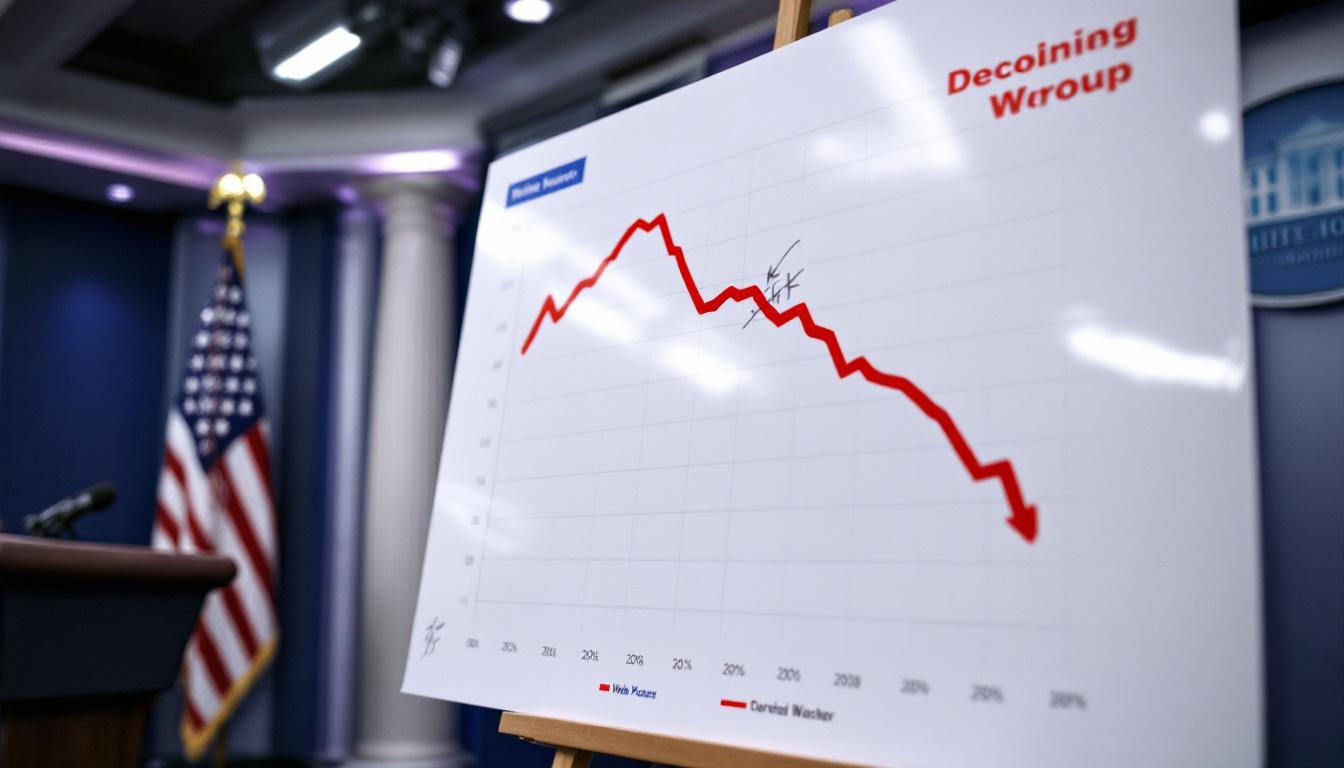
WASHINGTON — President Trump declared on Thursday that the ongoing military campaign against Iran constitutes his administration’s primary strategy for addressing anthropogenic climate change, telling reporters during an unscheduled appearance in the White House briefing room that the destruction of Iranian oil refining infrastructure had accomplished “more in two months than the Paris Climate Accord did in ten years, and we didn’t have to ruin any dishwashers.”
The remarks, which lasted approximately fourteen minutes and were delivered beside a laminated chart that sources familiar with its preparation said had been assembled by a junior National Security Council staffer over the weekend, represent the first time the president has explicitly framed the Iran campaign as environmental policy. Senior administration officials, speaking on the condition of anonymity because they were not authorized to characterize the president’s climate strategy, said Mr. Trump had been briefed earlier this week on a Defense Department assessment estimating that sustained strikes against Iranian petrochemical facilities had reduced the country’s annual carbon dioxide output by roughly 41 percent since operations began in January.
“Nobody else thought of this,” Mr. Trump said, tapping the chart with a marker he appeared to have used to add several annotations during the briefing. “The windmill people spent thirty years and trillions of dollars. I did it in two months. And Iran is not even a big country, emissions-wise. Wait until you see what happens if we have to do China.” He paused and added, “That’s a joke, probably,” a clarification that prompted the State Department to issue a separate statement within the hour affirming that the United States “has no plans to extend kinetic climate operations to additional nations at this time.”
The Pentagon assessment, which has not been publicly released but was described to The New York Time5 by three officials familiar with its contents, calculates the emissions reduction based on satellite imagery of degraded refinery capacity and interrupted petroleum export operations. It does not, the officials noted, account for the carbon output of the military campaign itself — including an estimated 14,000 sorties flown since January, the fuel consumption of two carrier strike groups, and the emissions associated with the manufacture and deployment of approximately $38 billion in precision-guided munitions. When asked whether the net climate impact of the campaign had been calculated, one official said, “That was not part of the tasking.”
Dr. Elena Voss, who writes the “Carrying Capacity” column for this newspaper, said the president’s claim was “arithmetically narrow in a way that is doing a great deal of structural work.” She noted that if the emissions produced by the campaign itself were included, “the net reduction is, at best, negligible, and at worst, substantially negative — before one accounts for the carbon released by burning cities, which the assessment apparently does not.” Dr. Voss added: “The data are clear that destroying a country’s industrial base will reduce that country’s industrial emissions. This is not a climate strategy. This is subtraction.”
On Capitol Hill, reaction divided along lines that sources familiar with the negotiations described as predictable. Senator Sheldon Whitehouse, Democrat of Rhode Island and chair of the Senate Budget Committee’s Climate Task Force, called the remarks “the most cynical thing I have heard in thirty years of climate advocacy, and I have heard members of this body describe coal as a renewable resource.” Senator John Barrasso, Republican of Wyoming, said in a statement that while he “would not have chosen this framing,” the president “deserves credit for being the first leader to identify the national security co-benefits of emissions reduction, or possibly the emissions reduction co-benefits of national security, depending on how you look at it.”
Senior officials said the president had requested that the Environmental Protection Agency begin incorporating the campaign’s estimated emissions reductions into its annual greenhouse gas inventory, a request that the agency’s acting administrator described in an internal email, obtained by The New York Time5, as “unprecedented and not obviously within our methodology, but we are reviewing it.”