Minnesota Man, Once Universally Recognized as Blond, Rejects Emerging Consensus That He Is Brunette
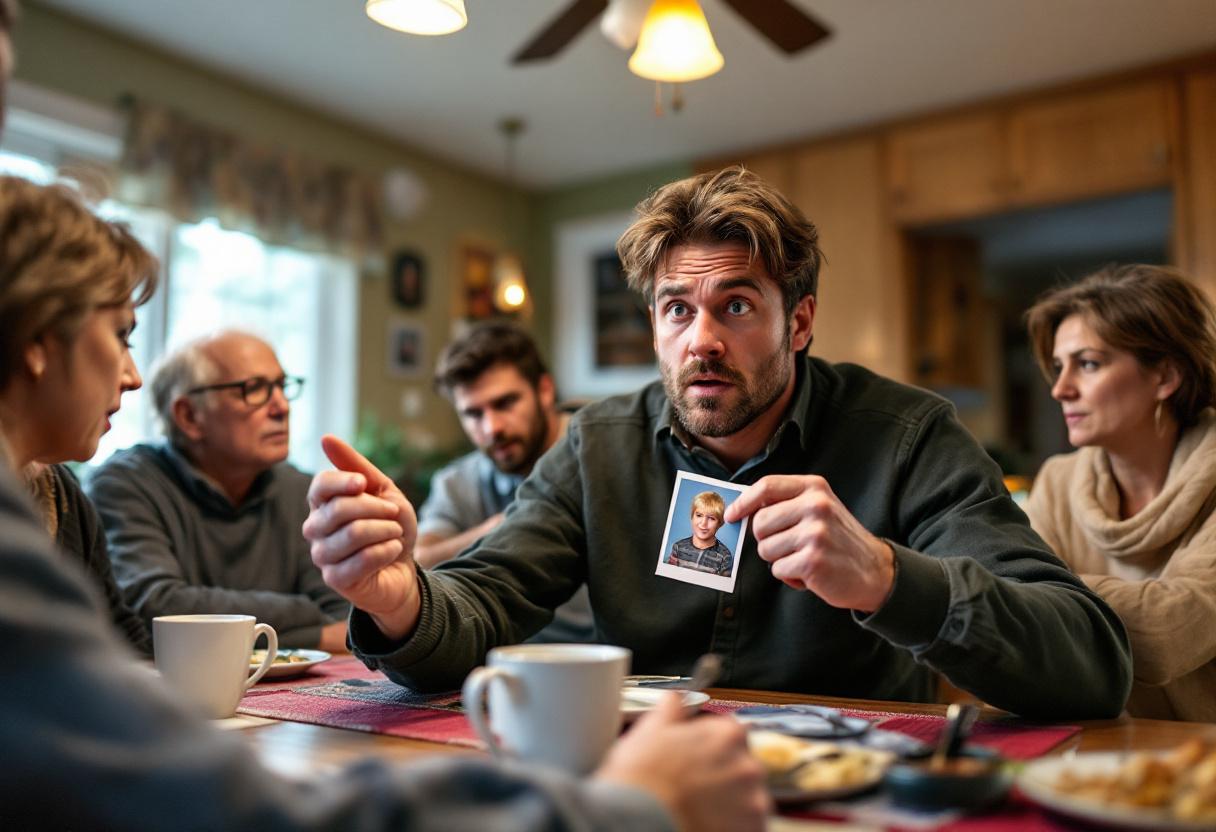
MINNEAPOLIS — Erik Halvorsen, a 34-year-old project coordinator of Norwegian descent, confirmed Monday that he remains “completely blond,” pushing back forcefully against what he characterized as a coordinated and factually baseless campaign by friends, family members, and coworkers to reclassify him as brunette.
Mr. Halvorsen, whose hair is currently described by three dermatologists, his wife, and a Walgreens photo kiosk color-matching tool as “medium brown with warm undertones,” said that the assessments were uninformed and reflected a fundamental misunderstanding of his personal history. He noted that in elementary school photographs from 1997 through approximately 2003, his hair is “unmistakably, almost aggressively blond,” and argued that this record should be treated as authoritative.
“I have the pictures,” Mr. Halvorsen said at a family gathering in Bloomington last Saturday, according to witnesses. “I have the documentation.” He went on to note that his maternal grandfather, Bjørn Halvorsen of Stavanger, Norway, was blond well into his late twenties, and that the phenomenon of Scandinavian hair darkening with age is, in his view, “overstated by people who did not grow up in that tradition.” A brief silence followed. Mr. Halvorsen reportedly refilled his coffee.
The dispute has introduced friction into several of his personal relationships. His sister, Ingrid Rutkowski, said she made the mistake of describing him as “the brown-haired one” while directing a stranger toward him at a wedding reception in August, and that the resulting conversation lasted forty-five minutes. His colleague Dana Park, who sits adjacent to him in an open-plan office, said she no longer references his hair color under any circumstances. “I just point,” Ms. Park said. Dr. Colleen Martz, a professor of identity formation at Macalester College who was not consulted for this article, noted in a 2021 paper that individuals with strongly ethnic self-concepts may experience hair-color transition as a form of cultural estrangement, a finding Mr. Halvorsen, when informed of it, said “actually makes a lot of sense” and immediately forwarded to seven people.
Mr. Halvorsen said he has no plans to revise his position. “People see what they expect to see,” he said. “I know what I am.”